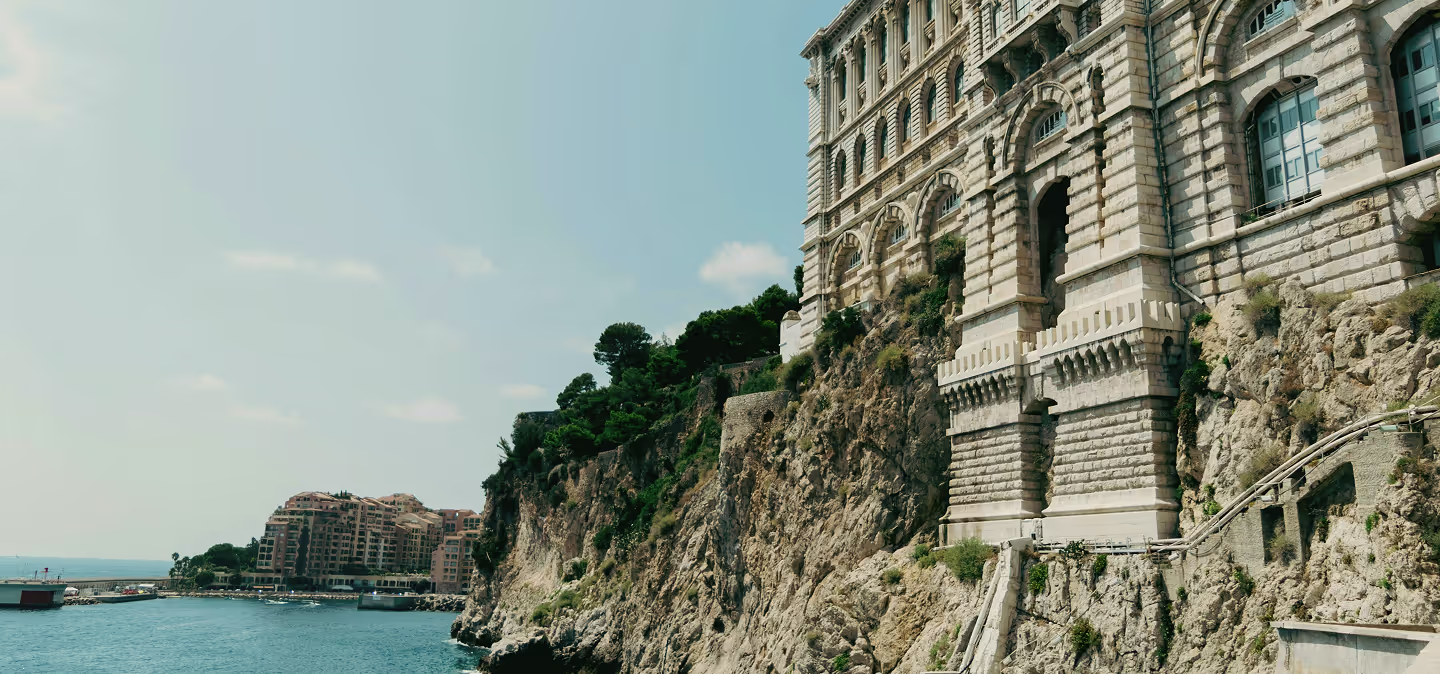
Capital of the Riviera of Flowers, home to Italy's famous song festival and a Belle Epoque casino, San Remo offers one of the finest Italian getaways from Monaco, one hour by train from Port Hercule.
One hour from Monaco, San Remo reveals the Italian Riviera at its most glamorous. Capital of the Riviera of Flowers, home to Italy's famous song festival and to a Belle Epoque casino, San Remo charms visitors with its hilltop medieval old town, its palm trees, its lively port and its easy Ligurian way of life. For guests of the Port Palace, visiting San Remo is one of the finest day trips from the Principality: close enough for a single day, rich enough to make you want to return. Here is our complete guide, drawing on the advice of our concierge team, to discover the city of flowers like an insider.
Why visit San Remo, capital of the Riviera of Flowers
Set in Liguria, in the province of Imperia, San Remo is the largest town on the Riviera dei Fiori, the Riviera of Flowers. Its nickname as the "city of flowers" is well earned: the region accounts for a significant share of Italian flower production, and San Remo's flower market remains one of the most important in Europe. This industry has shaped the town's identity as much as its economy.
San Remo also owes its fame to its past as a winter resort favoured by European aristocracy. In the late 19th century, Russian nobility, the imperial family and wealthy English families made it their habit, drawn by the mild climate. This cosmopolitan heritage left spectacular traces: a Liberty-style casino, a Russian Orthodox church with colourful domes, Belle Epoque hotels and a seafront promenade named after a Russian empress.
Today, San Remo strikes a rare balance between living city and holiday destination. People come for its labyrinthine old town, its casino, its beaches and its Ligurian cuisine, but also for its atmosphere as a cultural capital, carried each year by the Italian Song Festival. It is this density of experiences that sets San Remo apart from the other villages along the Ligurian coast.
💡 The concierge's tip
"San Remo is best discovered on foot. Park or step off the train near the port, then climb gradually towards La Pigna: the town reads like a cross-section, from the fashionable seafront up to the medieval lanes at the summit. Set off before 10am in summer, when the old town is still cool and deserted."
How to get to San Remo from Monaco
San Remo lies about 55 kilometres east of Monaco, just beyond Ventimiglia. Several options will take you to the city of flowers, depending on your budget and your taste for comfort.
By train: the most convenient option
From Monaco-Monte-Carlo station, a five-minute walk from the Port Palace, the journey to San Remo takes between one hour and one hour thirty. The Franco-Italian line serves Monaco, Menton, Garavan and then Ventimiglia, where the most common change takes place. At Ventimiglia, you leave the TER ZOU! train to board a regional Trenitalia train heading for Genoa, which reaches San Remo after about ten minutes. The connection usually lasts 10 to 25 minutes.
Allow from around 10 euros for a one-way ticket, combining the French and Italian sections. Tickets can be bought at station machines, via SNCF Connect for the French part and Trenitalia for the Italian part. On arrival, San Remo's station is underground and opens just steps from the centre and the seafront promenade, ideally placed to begin exploring on foot.
By car
The A8 motorway on the French side, continued by the A10 (Autostrada dei Fiori) on the Italian side, links Monaco to San Remo in about fifty minutes without traffic, via the Sanremo Ovest or Sanremo Est exits. Allow around 10 euros for tolls. Parking in the centre is mostly in paid covered car parks, notably the Palafiori one and those near the port. Avoid searching for an on-street space in high season, as it is time-consuming.
By private transfer
For optimal comfort, our guests favour a private transfer arranged in advance. A premium saloon or upscale van collects you at the hotel and drops you in the heart of San Remo, with no timetable or connection to worry about. The option particularly appeals to families, couples wishing to dine on site, and travellers returning laden from the market or from the boutiques of Via Matteotti.
💡 The concierge's tip
"Check your connections the day before: at Ventimiglia, some Italian regional trains leave just after the TER arrives, others leave you waiting 25 minutes. Keep your ticket until you exit the Italian station, as it may be checked. And remember to validate the Italian ticket at the green machines on the platform before boarding."
What to do in San Remo: the must-sees
San Remo is best discovered on foot, from the fashionable seafront up to the medieval lanes at the summit. A day is enough to grasp the essentials; two days let you add the beach, the cycle path and the surrounding excursions. Here are the sites not to be missed.
La Pigna, the medieval old town
The historic heart of San Remo, La Pigna owes its name to its pine-cone shape: a tangle of concentric lanes coiling around the hill. You enter through the Porta di Santo Stefano to plunge into a maze of vaulted passages, stone staircases, silent little squares and restored medieval houses. This labyrinth, designed in the Middle Ages to protect against Saracen raids, retains a timeless atmosphere.
Climbing to the top, you reach the Sanctuary of the Madonna della Costa, a Baroque sanctuary that overlooks the town and offers one of the finest panoramas over the bay and the port. The climb is rewarded with a 180-degree view over the Ligurian Sea.
The Casino of San Remo, a Belle Epoque jewel
Inaugurated in 1905, the Casino of San Remo is one of the town's symbols. Its Liberty architecture, designed by the French architect Eugene Ferret, presents a majestic facade facing the sea, at the top of the Corso degli Inglesi. Beyond the gaming rooms, the building houses a theatre and a concert hall that make it a genuine hub of cultural life. Even without playing, the exterior and the lobby are worth a look for their period elegance.
The Russian Orthodox church
With its multicoloured domes rising above the palm trees, the Church of Christ the Saviour, known as the Chiesa Russa, is one of San Remo's most photographed monuments. Built in the early 20th century for the Russian community that wintered on the Riviera, it draws on Moscow's churches and bears witness to the splendour of that cosmopolitan era. It stands just steps from the seafront, near the station.
San Siro Cathedral
At the heart of the lower town, San Siro Cathedral is San Remo's main religious building. Romanesque-Gothic in style and built on foundations dating back to the early Middle Ages, it houses a renowned black crucifix and a sobriety of stone that contrasts with the exuberance of the nearby casino. Its square is a natural landmark for finding your bearings in the centre.
The Corso dell'Imperatrice and the palm trees
The grand seafront promenade, the Corso dell'Imperatrice, bears the name of Empress Maria Alexandrovna of Russia, who contributed to embellishing the town by having palm trees planted. Lined with Canary palms, villas and gardens, this avenue is the ideal place for a stroll facing the sea, between the Chiesa Russa and the casino.
The seafront cycle path
One of San Remo's great assets is its Pista Ciclabile, a cycle path laid out on the former seafront railway line. Over nearly twenty-four kilometres, from San Lorenzo al Mare to Ospedaletti, it hugs the coast right by the water, passing through tunnels and converted former stations. On foot, by bike or on skates, it is one of the most beautiful walks on the Ligurian Riviera, accessible to all.
Villa Nobel
On the Corso Cavallotti, Villa Nobel was the last home of Alfred Nobel, inventor of dynamite and founder of the prizes that bear his name. The Swedish chemist spent the final years of his life here and died in 1896. Turned into a museum, the villa and its botanical garden can be visited and trace the life of this scholar in San Remo.
💡 The concierge's tip
"To photograph the Chiesa Russa without backlight, come in late afternoon: the golden light makes the coloured domes stand out against the sky. Follow up with an aperitivo on the Corso dell'Imperatrice, the moment when San Remo is at its most beautiful."
San Remo's market: Tuesday and Saturday
San Remo's weekly market is an unmissable event, famous well beyond the border. It is held on Tuesday and Saturday mornings, around Piazza Eroi Sanremesi and the neighbouring streets, generally from 8am to 1pm. You will find Italian clothing and linen, leather goods, shoes, flowers and stalls of regional produce. It is one of the Riviera's great markets, more fashionable and more fashion-oriented than the one in Ventimiglia.
☉ Good to know
The general market is held on Tuesdays and Saturdays. For fresh produce, the Mercato Annonario, a covered market near the port, is open every morning from Monday to Saturday. If you are hesitating between San Remo and the Ventimiglia market (held on Fridays), bear in mind that San Remo leans towards fashion and textiles, Ventimiglia towards volume and bargains.
The beaches of San Remo
San Remo lines up public beaches (spiagge libere) and private establishments (bagni) along its bay and as far as the Ospedaletti district. The surface mixes fine pebbles and sand, the water is clear and bathing is easy. The bagni offer sun loungers, parasols, seafront restaurants and water activities, with lounger rental prices varying by establishment and season.
The most convenient stretch is the one bordering the centre, just steps from the station and the promenade. For a quieter setting, the coast towards Ospedaletti, reachable via the cycle path, offers less crowded coves and particularly clear water.
San Remo, capital of Italian music
It is impossible to talk about San Remo without its Italian Song Festival. Every February, the Teatro Ariston hosts the Festival di Sanremo, Italy's oldest and most prestigious music competition, created in 1951. It was this festival that inspired the creation of the Eurovision Song Contest. For a week, the town moves to the rhythm of music and draws the attention of the entire country.
San Remo is also the finish of the Milano-Sanremo, one of the world's most prestigious cycling classics, nicknamed La Classicissima. Held every March over nearly three hundred kilometres, it traditionally ends on Via Roma, in the heart of the town, before a crowd of enthusiasts.
Where to eat in San Remo: Ligurian cuisine
Ligurian cooking stands out for its simplicity and the quality of its produce: taggiasca olive oil, basil, locally caught fish and seasonal vegetables. In San Remo, one speciality stands out: sardenaira, a kind of thick focaccia topped with tomato sauce, anchovies, taggiasca olives, capers and garlic, enjoyed on the go in the old town's bakeries.
As for seafood, the gamberi di Sanremo, these renowned red prawns, are the pride of local tables. In La Pigna and around the port, several family-run trattorias serve fresh pasta, pesto ground in a mortar and fried fish at reasonable prices, around 30 to 45 euros per person. In the evening, the restaurants of the Porto Vecchio offer a pleasant setting facing the boats. Booking is recommended in July and August.
San Remo is just an hour from Monaco, and the station is 5 minutes from the hotel.
Check availabilityWhen to visit San Remo
San Remo's mild climate makes for a pleasant visit much of the year, but each season has its own character.
Spring and early summer are perfect for combining walking, the old town and the first swims. July and August offer the liveliest summer atmosphere, but also the busiest. September remains our favourite season: the sea is still warm, temperatures stay summery and the town can breathe. In February, the visit takes on a particular flavour thanks to the Festival, but crowds and prices rise considerably during that week.
What to do around San Remo
San Remo is part of a string of villages and towns well worth combining on a stay in Monaco.
Bussana Vecchia
A few kilometres to the east, Bussana Vecchia is one of the most singular places in the region. This village was destroyed by the 1887 earthquake and abandoned, before being reclaimed in the 20th century by a community of artists who set up studios and galleries among the ruins. The atmosphere is unique, halfway between ghost village and creative colony.
Taggia and the Argentina valley
In the hinterland, Taggia preserves a remarkable medieval centre and remains the capital of the taggiasca olive. The Argentina valley that extends from it unrolls perched villages and olive groves as far as the eye can see.
Bordighera, Ventimiglia and Dolceacqua
On the way back to Monaco, several stops are a must. Our guide to visiting Bordighera details the Belle Epoque gem dear to Monet, while our guide to the Ventimiglia market helps plan a morning of bargain-hunting. For the hinterland, the medieval village of Dolceacqua and its bridge painted by Monet ideally rounds off an exploration of the Riviera of Flowers.
San Remo from the Port Palace: organising your excursion
Staying at the Port Palace, a boutique hotel on Port Hercule, makes reaching San Remo considerably easier. Monaco-Monte-Carlo station is a five-minute walk from the hotel, and our team can support you at every stage of your Italian day.
Our guests benefit from a concierge service that can book your train tickets, arrange a private transfer to San Remo, reserve your table in a trattoria in La Pigna or provide a personalised itinerary based on your interests. To explore the whole Riviera, our complete guide to transport in Monaco gives all the useful keys.
On your return, your market finds and gourmet souvenirs naturally find their place in our suites overlooking Port Hercule, where you can extend the Italian experience with a glass of Ligurian wine facing the yachts. You will also find a useful external guide on the Casino of San Remo and on the town via the Sanremo tourist guide to fine-tune your plans.
Port Palace Monaco
Experience Monaco and the Italian Riviera from Port Hercule
A five-minute walk from the station, our suites facing the port are the ideal starting point for a getaway to San Remo. Our concierge arranges your tickets, reservations and transfers for a seamless Italian day.
Book your stayPractical information to plan your visit
Frequently asked questions about San Remo
How do you get to San Remo from Monaco?
The best option is the train from Monaco-Monte-Carlo station, a five-minute walk from the Port Palace. The journey takes one hour to one hour thirty with a change at Ventimiglia, for a fare from around 10 euros one way. The car is a convenient alternative in fifty minutes without traffic via the A8 then A10 motorway.
What can you do in San Remo in one day?
Start with the old town of La Pigna and its sanctuary in the morning, then come back down towards the Chiesa Russa, the Corso dell'Imperatrice and the Casino. After a lunch of Ligurian specialities, devote the afternoon to the seafront cycle path or the beach, before an aperitivo facing the port at sunset.
What day is the San Remo market held?
San Remo's large general market is held on Tuesday and Saturday mornings, around Piazza Eroi Sanremesi, generally from 8am to 1pm. For fresh produce, the covered Mercato Annonario, near the port, is open every morning from Monday to Saturday.
Is it better to visit San Remo or Ventimiglia?
The two complement each other. San Remo is a real town, more fashionable, with its casino, its medieval old town and its fashion-oriented market. Ventimiglia appeals for its huge Friday market and its bargains. From Monaco, you can easily combine the two on a stay, or even in a single day by train.
Is San Remo worth visiting?
Yes, without reservation. San Remo offers a rare density of experiences on the Ligurian Riviera: a labyrinthine medieval old town, a Belle Epoque casino, a spectacular Russian church, a long seafront cycle path, flavourful Ligurian cuisine and a fascinating cosmopolitan history. It is one of the finest Italian getaways from Monaco.
What is the best time to visit San Remo?
April to June for the mild weather and walking, September for the still-warm sea and moderate crowds. July and August are the liveliest months. February draws music lovers for the Festival, but crowds and prices rise sharply during that week.
San Remo is one of those towns that condense the whole spirit of the Riviera: Belle Epoque elegance, Ligurian dolce vita, sea and mountains within easy reach. Between La Pigna and the casino, the market and the cycle path, the city of flowers offers from Monaco an Italian interlude as rich as it is easy to reach. The Port Palace, a boutique hotel on Port Hercule, is the ideal starting point: five minutes from the station, an hour from San Remo, and with a team to turn every excursion into a privileged moment.
